
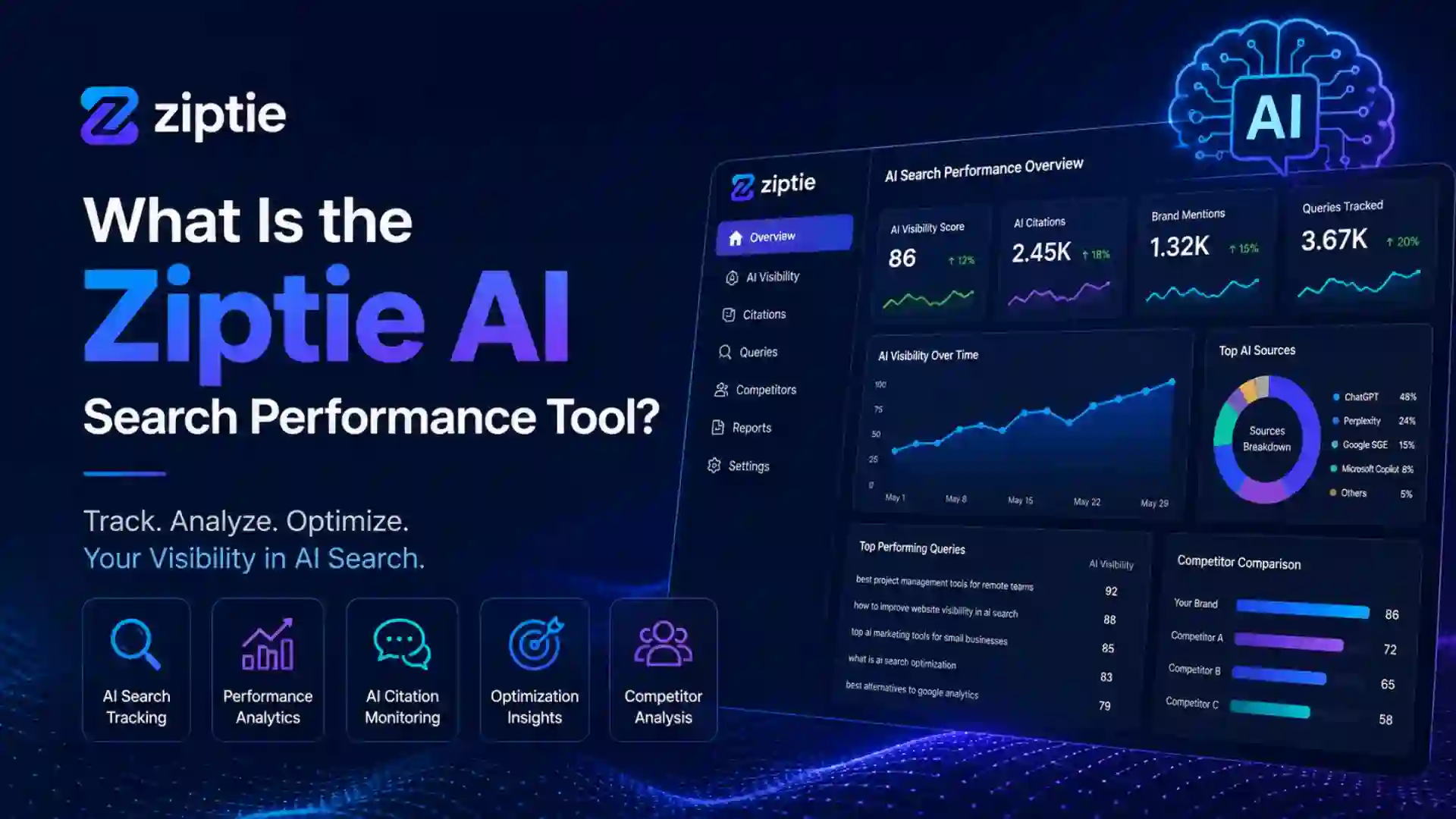
What Is the Ziptie AI Search Performance Tool? Artificial intelligence is changing how people search for information online. Traditional search engine optimization focused mainly on ranking websites in search engines like Google and Bing. However, the rise of AI-powered search systems has introduced a new challenge for website owners, businesses, marketers, and publishers. Today, many users receive direct AI-generated answers instead of clicking on multiple search results.
This shift has created a growing need for tools that help businesses understand how AI systems discover, analyze, and present their content. One tool gaining attention in this space is the Ziptie AI Search Performance Tool.
The Ziptie AI Search Performance Tool is designed to help brands, publishers, and marketers monitor and improve how their content performs inside AI-powered search experiences. Instead of focusing only on traditional search rankings, it focuses on AI visibility, AI-generated citations, conversational search presence, and content discoverability across modern AI systems.
As AI assistants become more common in search engines, mobile devices, browsers, and productivity applications, tools like Ziptie are becoming increasingly important for digital marketing strategies.
In this article, you will learn what the Ziptie AI Search Performance Tool is, how it works, its key features, benefits, limitations, use cases, and why AI search optimization is becoming essential for modern businesses.
Understanding AI Search Performance
Before discussing Ziptie specifically, it is important to understand what AI search performance means.
Traditional search performance refers to how well a website ranks in search engine result pages. Metrics typically include:
- Keyword rankings
- Organic traffic
- Click-through rates
- Backlinks
- Domain authority
- Indexed pages
AI search performance is different. AI systems often summarize information instead of displaying a list of blue links. These systems analyze content from multiple websites and generate direct responses for users.
Examples of AI search environments include:
- AI-generated search overviews
- Conversational AI assistants
- Chat-based search engines
- Voice assistants
- AI productivity tools
- AI browser assistants
In these environments, websites may receive visibility even without a direct click. The challenge is that traditional SEO tools often cannot measure this type of exposure accurately.
This is where the Ziptie AI Search Performance Tool becomes useful.
What Is the Ziptie AI Search Performance Tool?
The Ziptie AI Search Performance Tool is an analytics and optimization platform focused on AI-driven search visibility. It helps businesses track how their brand, website, products, and content appear within AI-generated search responses.
Instead of only monitoring traditional search engine rankings, Ziptie aims to measure:
- AI citations
- Brand mentions in AI responses
- Content usage by AI systems
- Conversational search visibility
- AI-generated answer inclusion
- Competitive AI positioning
The platform is designed for marketers, SEO professionals, publishers, SaaS companies, eCommerce brands, agencies, and content creators who want to understand how AI search systems interact with their content.
As search behavior evolves, businesses are increasingly concerned about whether AI tools are referencing their websites or bypassing them entirely. Ziptie attempts to solve this problem by offering insights into AI visibility and performance.
Why AI Search Optimization Matters?
AI-powered search is changing the digital marketing landscape in several ways.
Reduced Click-Through Rates
AI-generated answers often provide direct information without requiring users to visit external websites. This may reduce organic traffic for many publishers.
Increased Importance of Authority
AI systems prefer trustworthy, well-structured, and authoritative content. Brands with stronger credibility are more likely to appear in AI-generated answers.
Conversational Search Growth
Users are increasingly asking long, conversational questions rather than typing short keywords. This changes how content should be optimized.
Brand Visibility Beyond Rankings
A website may not rank first traditionally but can still appear prominently inside AI-generated summaries.
Competitive Intelligence
Businesses now need to know whether competitors are being cited more frequently in AI systems.
These changes have created demand for AI-focused analytics platforms like Ziptie.
Core Features of the Ziptie AI Search Performance Tool
The Ziptie AI Search Performance Tool includes several important capabilities designed specifically for AI-era search monitoring.
AI Citation Tracking
One of the most important features is AI citation tracking.
This feature helps users discover:
- Which AI systems mention their content
- How frequently their brand appears
- Which pages receive citations
- Which competitors are referenced instead
This allows marketers to understand their AI visibility more effectively.
Conversational Query Monitoring
Traditional SEO tools focus mainly on keywords. Ziptie focuses on conversational prompts and natural language queries.
The platform can analyze how websites perform for complex questions such as:
- “What are the best AI marketing tools?”
- “Which software improves AI search visibility?”
- “How can businesses optimize for AI search engines?”
This approach better reflects how users interact with modern AI systems.
Brand Mention Analysis
Ziptie may help track how AI platforms discuss a brand.
This can include:
- Positive mentions
- Neutral mentions
- Competitive comparisons
- Industry positioning
Brand perception inside AI systems may become increasingly valuable for digital reputation management.
Competitor AI Visibility Tracking
The platform can compare AI search visibility between competitors.
Users may identify:
- Which brands dominate AI-generated answers
- Which content formats perform best
- Which topics generate the most AI citations
This helps businesses improve their content strategy.
AI Search Analytics Dashboard
The analytics dashboard usually provides centralized performance insights.
Common metrics may include:
| Feature | Purpose |
|---|---|
| AI Mentions | Tracks brand appearance in AI responses |
| Citation Frequency | Measures how often content is referenced |
| Query Visibility | Shows performance for conversational prompts |
| Competitor Comparison | Compares AI visibility against competitors |
| Content Coverage | Identifies pages used by AI systems |
| Trend Analysis | Monitors visibility changes over time |
These insights help marketers make informed optimization decisions.
Content Optimization Recommendations
Some AI search performance tools provide optimization suggestions based on AI behavior patterns.
Possible recommendations may include:
- Improving content structure
- Adding factual clarity
- Increasing topical authority
- Using conversational formatting
- Updating outdated content
- Enhancing semantic relevance
This helps websites become more AI-friendly.
Multi-Platform AI Monitoring
AI search visibility is not limited to one platform.
A tool like Ziptie may monitor visibility across multiple environments, including:
- AI search engines
- Chat assistants
- AI browsers
- Voice assistants
- Enterprise AI tools
This broader monitoring approach gives businesses a more complete understanding of their AI presence.
How the Ziptie AI Search Performance Tool Works?
Although exact implementation details may vary, most AI visibility tools generally follow several core processes.
Query Simulation
The system runs large numbers of conversational prompts through AI search systems to analyze responses.
For example, it may test prompts related to:
- Products
- Services
- Industry topics
- Brand names
- Buying recommendations
It then checks whether the target website appears in responses.
Citation Extraction
The platform extracts references, links, and mentions from AI-generated content.
This helps determine:
- Citation frequency
- Source preference
- Topic authority
- Visibility consistency
Content Mapping
Ziptie may identify which pages are most frequently used by AI systems.
This helps businesses understand which content performs best in AI search environments.
Competitive Benchmarking
The system compares AI visibility metrics between multiple brands or websites.
This allows businesses to discover strengths and weaknesses in their AI search strategy.
Reporting and Recommendations
Finally, the platform generates reports and optimization suggestions.
These reports may include:
- AI visibility scores
- Content performance metrics
- Competitive analysis
- Query-level insights
- Strategic recommendations
Benefits of Using the Ziptie AI Search Performance Tool
Businesses may gain several advantages from using an AI-focused search performance platform.
Better Understanding of AI Visibility
Traditional analytics often fail to measure AI-driven exposure accurately.
Ziptie helps businesses understand whether AI systems are referencing their content.
Improved Content Strategy
By identifying which content types perform best in AI systems, businesses can improve future content creation.
Competitive Insights
Understanding competitor visibility helps companies adjust their strategy more effectively.
Early Adoption Advantage
AI search optimization is still relatively new. Early adopters may gain a competitive edge before the market becomes saturated.
Enhanced Brand Authority
Appearing frequently in AI-generated responses may strengthen perceived brand authority.
More Efficient SEO Planning
Businesses can combine traditional SEO with AI search optimization for better overall visibility.
Who Can Use the Ziptie AI Search Performance Tool?
The platform can be useful for many different industries and professionals.
SEO Professionals
SEO specialists can monitor how search behavior changes in AI environments.
Digital Marketing Agencies
Agencies can provide AI visibility reporting to clients.
Content Publishers
Publishers can analyze how AI systems use their articles and guides.
SaaS Companies
Software companies can track product mentions inside AI-generated recommendations.
eCommerce Businesses
Online stores can monitor product visibility within AI shopping suggestions.
Enterprise Brands
Large companies can track AI reputation and brand positioning.
Important Information About AI Search Optimization
The following table summarizes key concepts related to AI search performance and Ziptie-style platforms.
| Topic | Description |
| AI Search Visibility | Presence inside AI-generated responses |
| Conversational Search | Search queries written in natural language |
| AI Citations | References used by AI systems |
| Brand Mentions | AI-generated references to a company or product |
| AI Optimization | Improving content for AI discoverability |
| Semantic Relevance | Contextual understanding of content |
| Authority Signals | Indicators of trustworthiness and expertise |
| Content Structuring | Organizing information for AI readability |
| Competitive AI Analysis | Comparing AI visibility across brands |
| AI Analytics | Performance measurement in AI ecosystems |
How to Improve AI Search Performance?
Businesses interested in improving AI visibility should focus on several best practices.
Create High-Quality Content
AI systems favor accurate, authoritative, and helpful content.
Content should:
- Solve user problems
- Provide factual information
- Use clear language
- Include detailed explanations
Use Structured Formatting
Well-organized content is easier for AI systems to analyze.
Useful formatting includes:
- Headings
- Bullet points
- Tables
- FAQs
- Step-by-step explanations
Build Topical Authority
Publishing multiple high-quality articles around a specific subject improves authority signals.
Keep Content Updated
AI systems may prioritize fresh and relevant information.
Regular updates improve long-term visibility.
Focus on Conversational Queries
Modern AI search relies heavily on natural language.
Businesses should optimize content for realistic user questions.
Improve E-E-A-T Signals
Experience, Expertise, Authoritativeness, and Trustworthiness remain important.
Strong credibility improves the likelihood of AI citations.
Limitations of AI Search Performance Tools
Despite their usefulness, AI visibility tools also have limitations.
Rapidly Changing AI Systems
AI search technology evolves quickly, making consistent tracking difficult.
Incomplete Transparency
Many AI systems do not fully reveal how citations are selected.
Measurement Challenges
AI visibility is harder to quantify than traditional rankings.
Platform Differences
Different AI systems may generate different answers for the same query.
Uncertain Traffic Attribution
Even if AI mentions a brand, users may not click through to the website.
The Future of AI Search Analytics
AI search optimization will likely become a major part of digital marketing over the next several years.
Future developments may include:
- Dedicated AI SEO strategies
- AI visibility scoring standards
- Better AI attribution systems
- AI-focused content auditing
- Advanced conversational analytics
- Deeper integration with traditional SEO platforms
As AI search adoption grows, businesses will need better tools to monitor and optimize visibility.
Platforms like Ziptie represent an early step toward this new form of search analytics.
FAQ about What is the Ziptie AI Search Performance Tool?
What is the Ziptie AI Search Performance Tool?
The Ziptie AI Search Performance Tool is a platform designed to track and optimize how brands and websites appear in AI-generated search responses and conversational AI systems.
How is AI search performance different from traditional SEO?
Traditional SEO focuses on rankings and clicks, while AI search performance focuses on visibility within AI-generated answers, citations, and conversational search results.
Who should use Ziptie?
SEO professionals, marketers, publishers, SaaS companies, agencies, and enterprise brands can benefit from AI visibility analytics.
Does AI search optimization replace traditional SEO?
No. AI search optimization works alongside traditional SEO rather than replacing it.
Why are AI citations important?
AI citations may increase brand visibility, authority, and awareness even when users do not directly click on a website.
Can AI visibility improve website traffic?
Potentially yes, although some AI systems provide direct answers without sending users to external websites.
What types of content perform best in AI search?
High-quality, authoritative, structured, conversational, and fact-based content usually performs best.
Is AI search optimization becoming important?
Yes. As AI-powered search experiences grow, businesses increasingly need to optimize content for AI discoverability.
Conclusion
The digital search landscape is undergoing a major transformation. AI-powered search systems are changing how users discover information, how brands gain visibility, and how websites attract audiences. Traditional SEO remains important, but it is no longer the only factor determining online visibility.
The Ziptie AI Search Performance Tool represents a new category of analytics platforms designed specifically for the AI search era. By tracking AI citations, conversational search visibility, brand mentions, and competitive AI presence, the platform helps businesses understand how their content performs within modern AI ecosystems.
As AI assistants become more integrated into daily internet usage, businesses that adapt early may gain significant advantages. Understanding AI search visibility is likely to become an essential part of digital marketing, content strategy, and online brand management.
Whether you are a marketer, publisher, SEO expert, SaaS company, or business owner, learning how AI systems interpret and present your content will become increasingly valuable in the years ahead.