
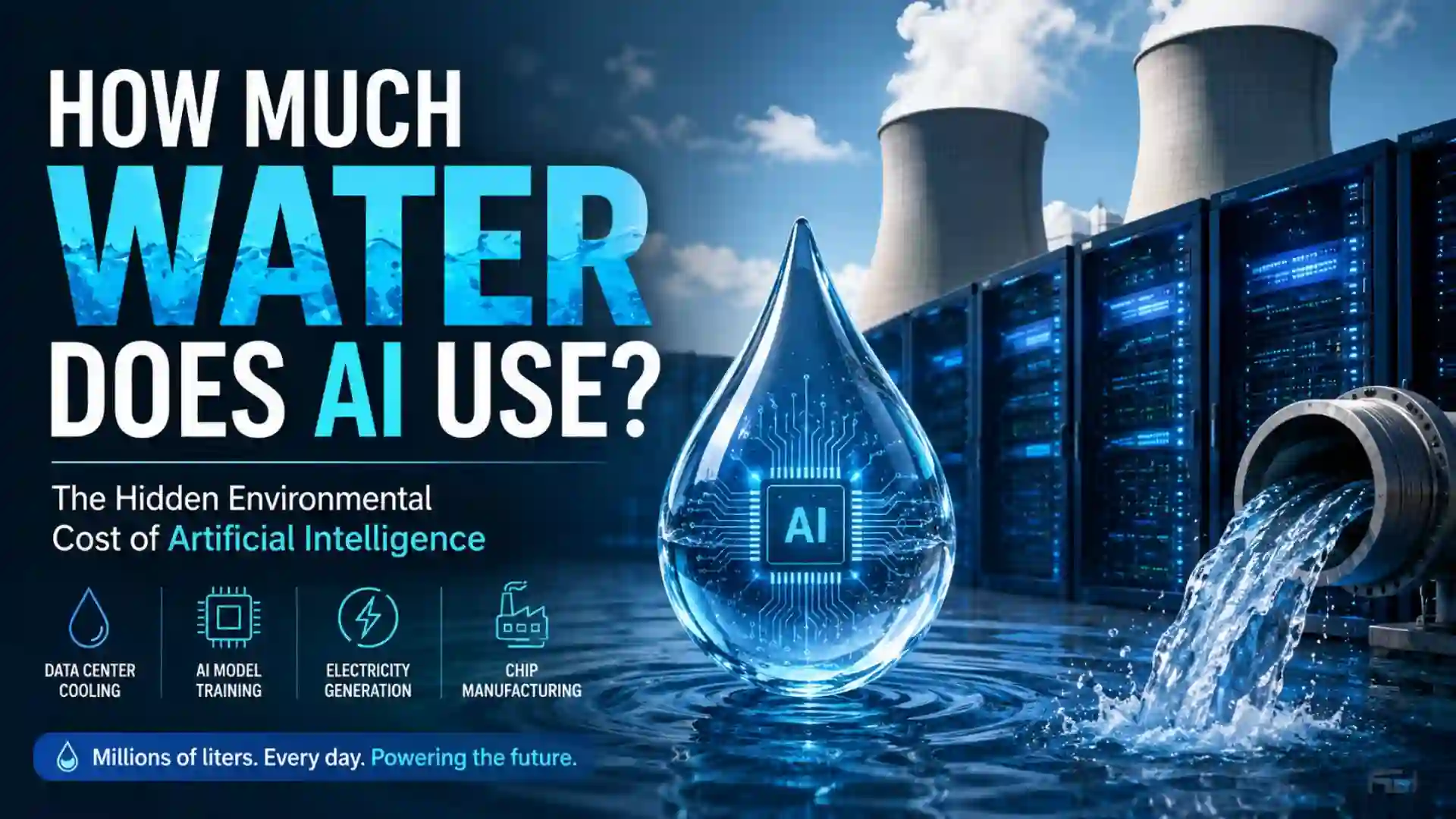
How Much Water Does AI Use? Artificial Intelligence is transforming the modern world at an incredible speed. From AI chatbots and image generators to recommendation systems and self-driving technology, artificial intelligence is becoming part of daily life. Millions of people use AI tools every day without thinking about the infrastructure that powers them behind the scenes.
Most discussions around AI focus on innovation, automation, productivity, and the future of work. However, one important topic is often ignored: water consumption. Many people are surprised to learn that artificial intelligence systems require enormous amounts of water to function properly. The growth of AI has increased pressure on data centers, electricity systems, and cooling infrastructure around the world.
The question “How much water does AI use?” has become increasingly important because AI models continue to grow larger and more complex. Training and operating these systems require powerful servers that produce large amounts of heat. Water is one of the primary resources used to cool these servers and maintain stable temperatures inside data centers.
In this article, we will explore how AI uses water, why water consumption matters, how much water popular AI systems may consume, the environmental impact of AI infrastructure, and what companies are doing to reduce water usage.
What Does Water Have to Do With AI?
At first glance, AI and water may seem unrelated. Artificial intelligence is digital, while water is a physical resource. The connection becomes clear when you understand how AI systems are built and operated.
AI models run on powerful computing hardware located inside large data centers. These facilities contain thousands of processors, GPUs, networking systems, and storage devices. When these machines operate continuously, they generate massive amounts of heat.
If the equipment becomes too hot, performance decreases and hardware can fail. To prevent overheating, data centers use cooling systems. Many of these systems rely heavily on water.
Water is used in several ways:
- Cooling servers directly or indirectly
- Maintaining proper temperatures in data centers
- Supporting electricity generation used to power AI infrastructure
- Manufacturing semiconductor chips and hardware components
As AI adoption grows, the demand for computing power also increases. More computing power means more electricity and more cooling requirements, which leads to higher water usage.
How Data Centers Use Water?
The majority of AI-related water consumption comes from data centers. These facilities are designed to keep servers operating efficiently 24 hours a day.
There are several types of cooling systems used in data centers:
Evaporative Cooling
This is one of the most common methods. Water absorbs heat and evaporates, cooling the surrounding air. While effective, this process can consume large quantities of water daily.
Chilled Water Systems
Cold water circulates through pipes and absorbs heat from server rooms. The warmed water is then cooled again and reused.
Cooling Towers
Cooling towers remove heat from water used in the system. Some water evaporates during this process, increasing total water consumption.
Liquid Cooling for AI Chips
Modern AI hardware such as advanced GPUs produces extremely high temperatures. Some systems use liquid cooling technologies where fluids circulate close to processors to remove heat more efficiently.
Why AI Uses More Water Than Traditional Computing?
Artificial intelligence workloads are far more demanding than standard internet activities.
For example:
- Sending an email requires minimal computing power
- Streaming a movie uses more resources
- Training a large AI model requires enormous computational capacity
AI training involves processing huge datasets across thousands of specialized chips over weeks or even months. This intensive activity generates significant heat.
Generative AI systems such as chatbots and image generators also require continuous processing after deployment. Every user query consumes computing resources.
As millions of users interact with AI systems daily, operational water consumption increases substantially.
How Much Water Does AI Actually Use?
Estimating exact water usage is difficult because technology companies rarely publish complete operational details. However, researchers and public sustainability reports provide useful estimates.
Water Used During AI Training
Training a large AI model can consume hundreds of thousands of liters of water.
Researchers have estimated that training advanced language models may use water equivalent to the lifetime water consumption of several hundred people in some regions.
One widely discussed estimate suggested that training a major language model in a large data center could consume around 700,000 liters of fresh water. This includes both direct cooling and indirect electricity-related water usage.
The exact amount depends on several factors:
- Model size
- Training duration
- Hardware efficiency
- Cooling technology
- Climate conditions
- Energy source
Water Used Per AI Interaction
Even individual AI queries consume small amounts of water.
Some researchers estimate that generating a lengthy AI response may indirectly consume several hundred milliliters of water depending on the infrastructure used.
While one interaction may seem insignificant, the numbers become enormous at scale. Millions of AI requests every hour can translate into substantial water demand globally.
Important Information and Resource
| Topic | Details |
|---|---|
| Main Source of AI Water Usage | Data center cooling systems |
| Primary Cooling Method | Evaporative cooling and chilled water systems |
| AI Training Water Consumption | Can reach hundreds of thousands of liters |
| Major Water Usage Areas | Server cooling, electricity generation, chip manufacturing |
| Most Water-Intensive AI Activity | Large-scale model training |
| Additional Environmental Concern | Electricity consumption and carbon emissions |
| Water Usage Depends On | Climate, infrastructure, energy source, hardware efficiency |
| AI Companies Working on Solutions | Google, Microsoft, Amazon, Meta |
| Sustainable Alternatives | Air cooling, renewable energy, recycled water |
| Why It Matters | Freshwater scarcity and environmental sustainability |
The Link Between Electricity and Water Usage
AI water consumption is not limited to cooling alone. Electricity production also requires water.
Many power plants use water for cooling and energy generation. Since AI systems consume enormous amounts of electricity, their indirect water footprint can be very large.
This is called “indirect water usage.”
For example:
- Coal power plants require water for steam production and cooling
- Nuclear power plants use large cooling systems
- Some renewable systems also require water during manufacturing and maintenance
Therefore, the total water footprint of AI includes:
- Direct water usage in data centers
- Indirect water usage from electricity production
AI Data Centers and Regional Water Stress
The environmental impact of AI depends heavily on location.
Some data centers are built in regions already facing water shortages. When large facilities consume millions of liters of water annually, local communities may experience increased pressure on freshwater supplies.
Hot climates often require more cooling, which increases water demand further.
This has created concerns in areas where:
- Droughts are common
- Agriculture depends on limited water supplies
- Population growth is increasing water demand
- Climate change is reducing freshwater availability
Balancing technological growth with environmental sustainability has become a major challenge.
Water Usage in Chip Manufacturing
AI systems rely on specialized semiconductors and GPUs. Manufacturing these chips also consumes significant amounts of water.
Semiconductor production requires ultra-pure water for cleaning and processing wafers. Large chip fabrication plants can use millions of gallons of water every day.
As demand for AI chips increases globally, water consumption in the semiconductor industry is also rising.
This means AI water usage extends beyond data centers into the entire supply chain.
How Big Tech Companies Are Responding?
Technology companies are aware of growing concerns about water consumption. Many major firms have introduced sustainability initiatives aimed at reducing environmental impact.
Water Recycling
Some companies use recycled or reclaimed water instead of drinking-quality freshwater for cooling operations.
Efficient Cooling Technologies
New cooling systems are being developed to reduce evaporation losses and improve efficiency.
AI-Optimized Infrastructure
Companies are designing more efficient AI chips that generate less heat while delivering better performance.
Renewable Energy Investments
Using renewable energy sources can reduce indirect water consumption associated with fossil fuel electricity generation.
Water Replenishment Projects
Some firms invest in environmental projects intended to restore water resources in communities where they operate.
Microsoft and AI Water Consumption
Reports have shown that the expansion of AI services has contributed to increased water usage among major technology companies.
As cloud computing and AI services grow, companies are building more advanced data centers to support demand.
Microsoft, Google, and other cloud providers have published sustainability reports discussing their environmental goals, including water reduction strategies.
However, critics argue that transparency remains limited and more detailed reporting is necessary.
Google’s AI Expansion and Water Use
Google has acknowledged that its water consumption increased in recent years partly due to AI expansion.
The company has invested heavily in efficient data center infrastructure, but rising AI workloads continue to increase resource demand.
Google has stated goals related to water stewardship and sustainable operations, including replenishing more water than it consumes in certain regions.
Can AI Become More Water Efficient?
Yes, there are several ways AI systems can become more sustainable.
Improved Hardware Efficiency
New AI processors can perform more calculations while generating less heat.
Better Algorithms
Optimized AI models require fewer computations and less training time.
Smarter Data Center Design
Modern facilities use advanced airflow systems, temperature management, and cooling optimization techniques.
Alternative Cooling Methods
Some companies are exploring:
- Immersion cooling
- Seawater cooling
- Air cooling in colder climates
- Closed-loop cooling systems
Smaller AI Models
Not every application requires giant language models. Smaller and specialized models may reduce overall resource consumption.
The Debate Around AI Sustainability
AI supporters argue that artificial intelligence can help solve environmental challenges.
Potential benefits include:
- Optimizing energy systems
- Improving agriculture efficiency
- Predicting weather and climate patterns
- Reducing transportation waste
- Enhancing industrial efficiency
Critics argue that rapid AI expansion may increase environmental strain if sustainability is not prioritized.
The key issue is balance. AI can create significant value, but infrastructure growth must consider environmental limits.
Comparing AI Water Usage to Other Industries
While AI consumes substantial water, it is not the only industry with large water demands.
Industries with high water usage include:
- Agriculture
- Textile manufacturing
- Energy production
- Mining
- Semiconductor manufacturing
However, AI is unique because its growth rate is extremely fast. The sudden increase in global AI adoption means water consumption may rise quickly over the next decade.
Public Awareness Is Increasing
For many years, people mainly discussed AI in terms of jobs, automation, and ethics. Environmental concerns received less attention.
Today, researchers, journalists, and policymakers are increasingly examining the hidden costs of digital infrastructure.
Consumers are beginning to ask questions such as:
- How sustainable are AI tools?
- What environmental resources do they consume?
- Can AI growth continue responsibly?
- Should companies disclose environmental impact more clearly?
These conversations are likely to become more important as AI adoption expands worldwide.
Future Challenges for AI and Water Resources
The future of AI will depend partly on how effectively the industry manages resource consumption.
Key challenges include:
Rising Global AI Demand
More businesses and consumers are using AI every year.
Climate Change
Higher temperatures increase cooling requirements for data centers.
Water Scarcity
Many regions already face freshwater shortages.
Infrastructure Expansion
More data centers mean greater cumulative water usage.
Regulatory Pressure
Governments may introduce environmental regulations affecting AI infrastructure.
Possible Solutions for Sustainable AI
Several long-term solutions may help reduce AI’s water footprint.
Building Data Centers in Cooler Regions
Colder climates naturally reduce cooling requirements.
Using Renewable Energy
Renewable energy sources may reduce indirect environmental impact.
Closed-Loop Water Systems
These systems recycle water internally to minimize waste.
Advanced Cooling Technologies
Immersion cooling and liquid cooling may improve efficiency significantly.
Transparency and Reporting
Public environmental reporting can encourage accountability and innovation.
Should People Be Concerned About AI Water Usage?
Concern does not necessarily mean rejecting AI technology. Instead, it means encouraging responsible development.
Every major technology system has environmental impacts. The goal should be minimizing harm while maximizing societal benefits.
AI companies, governments, researchers, and consumers all play a role in shaping sustainable technology practices.
Understanding the environmental footprint of AI helps create informed discussions about the future of digital infrastructure.
The Role of Consumers
Consumers also influence the direction of technology development.
Public demand for sustainability can encourage companies to:
- Improve efficiency
- Publish environmental reports
- Invest in greener infrastructure
- Reduce wasteful computing practices
As awareness grows, environmental sustainability may become a competitive advantage for AI companies.
FAQ about How Much Water Does AI Use?
Does AI really use water?
Yes. AI systems rely on data centers that use water for cooling servers and infrastructure. Electricity generation and chip manufacturing also contribute to AI-related water consumption.
Why do AI servers need cooling?
AI hardware generates significant heat during operation. Cooling systems prevent overheating and maintain reliable performance.
How much water does training an AI model use?
Large AI models may consume hundreds of thousands of liters of water during training, depending on the infrastructure and energy source used.
Does every AI query use water?
Indirectly, yes. Every AI interaction requires computing resources, which contribute to electricity use and cooling demand.
Which part of AI consumes the most water?
Training large AI models is among the most water-intensive activities because it requires massive computational power over long periods.
Are AI companies trying to reduce water usage?
Many major technology companies are investing in efficient cooling systems, renewable energy, recycled water, and sustainable infrastructure.
Is AI worse for the environment than other industries?
AI is not necessarily the largest water-consuming industry, but its rapid growth raises concerns about long-term sustainability and resource management.
Can sustainable AI become possible?
Yes. Advances in hardware efficiency, cooling technologies, renewable energy, and smarter algorithms can reduce environmental impact significantly.
Conclusion
Artificial intelligence is reshaping industries, communication, education, healthcare, and entertainment. Behind the convenience and innovation of AI lies a massive physical infrastructure that requires energy, cooling, and water.
The question “How much water does AI use?” reveals an important environmental issue that many people overlook. AI systems depend on data centers filled with powerful hardware that generates heat continuously. Cooling these systems often requires large amounts of water, especially during the training and operation of advanced models.
As AI adoption accelerates worldwide, water consumption linked to digital infrastructure will likely continue rising. This creates challenges related to sustainability, climate change, and resource management.
At the same time, technology companies are investing in greener solutions such as recycled water systems, efficient cooling technologies, renewable energy, and optimized hardware. The future of AI sustainability will depend on innovation, transparency, and responsible infrastructure planning.
Understanding the environmental cost of AI does not mean rejecting technological progress. Instead, it encourages smarter decisions about how artificial intelligence is developed and deployed. Sustainable AI practices can help balance innovation with environmental responsibility, ensuring that future advancements do not come at the expense of critical natural resources like water.