
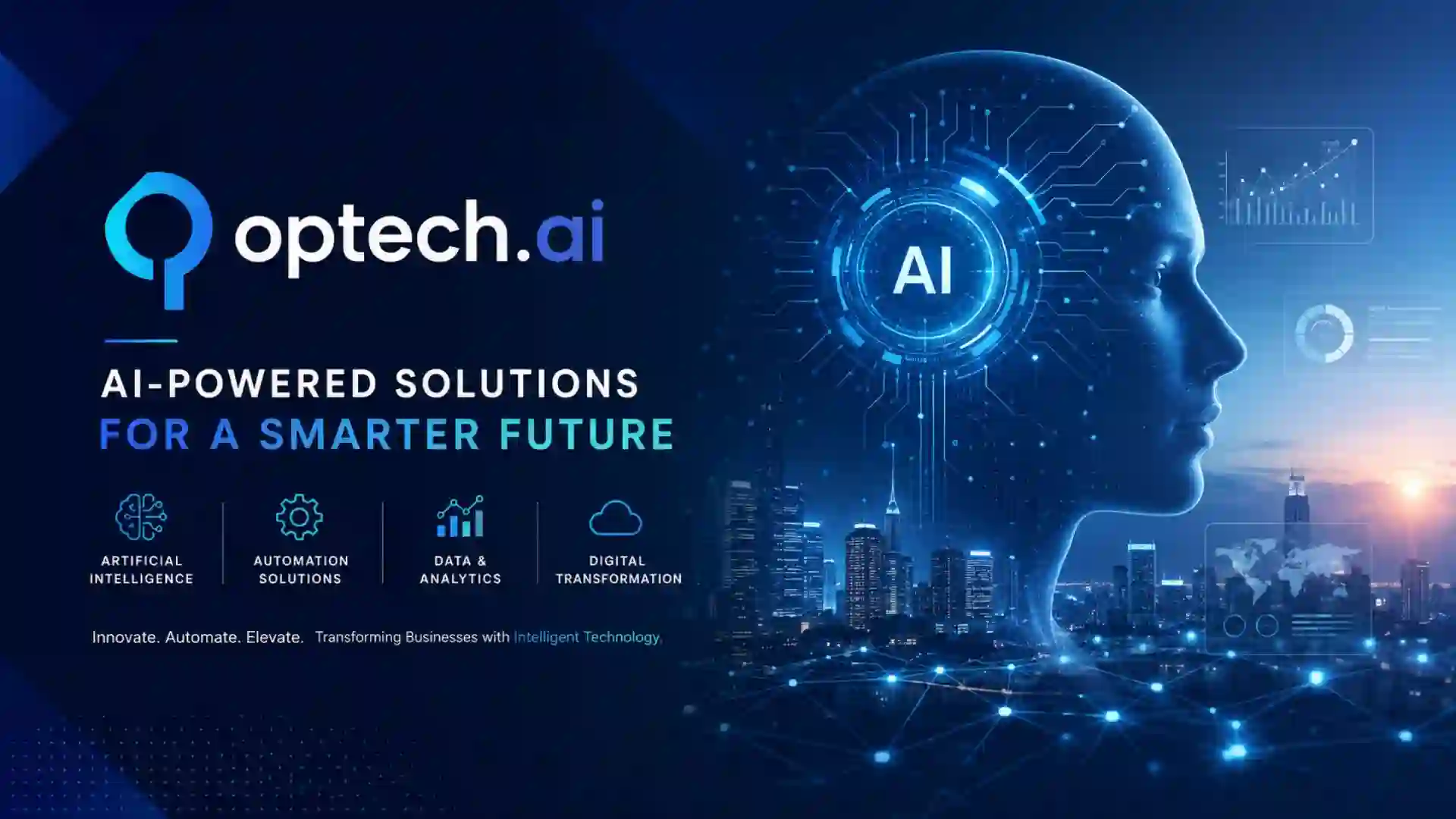
Optech.ai Company Overview: Artificial intelligence has transformed the way organizations operate, communicate, analyze data, and serve customers. Businesses across industries are investing heavily in AI-powered solutions to improve efficiency, reduce costs, and gain competitive advantages. Among the growing number of companies operating in this space, Optech.ai has emerged as a technology-focused organization that aims to help enterprises leverage artificial intelligence and automation for business growth.
As organizations continue their digital transformation journeys, companies like Optech.ai play an important role by providing AI-driven solutions, consulting expertise, and advanced technology frameworks that enable businesses to adopt intelligent systems more effectively.
This article provides a comprehensive overview of Optech.ai, including its business focus, services, technology approach, value proposition, market opportunities, challenges, and future prospects.
Company Snapshot
| Category | Information |
|---|---|
| Company Name | Optech.ai |
| Industry | Artificial Intelligence and Technology Solutions |
| Primary Focus | AI-powered business transformation |
| Core Services | Artificial Intelligence, Automation, Analytics, Digital Transformation |
| Target Customers | Enterprises, Businesses, Technology Organizations |
| Key Technologies | Machine Learning, Data Analytics, Automation, AI Platforms |
| Business Objective | Improve operational efficiency and decision-making |
| Market Segment | Enterprise Technology Solutions |
What is Optech.ai?
Optech.ai is a technology-focused company that specializes in artificial intelligence solutions designed to help organizations optimize processes, automate workflows, and improve business performance.
The company operates within the broader AI ecosystem, where businesses increasingly rely on intelligent technologies to process large volumes of information, generate insights, and support strategic decision-making.
Rather than replacing human expertise, platforms such as Optech.ai aim to augment business operations by combining human intelligence with machine learning capabilities.
Organizations today face several challenges:
- Increasing operational complexity
- Growing volumes of business data
- Rising customer expectations
- Competitive market environments
- Demand for real-time decision-making
Optech.ai addresses these challenges through technology solutions that help companies become more agile, efficient, and data-driven.
Vision and Mission
The vision behind companies operating in the AI sector generally centers on making intelligent technologies more accessible and practical for businesses.
Optech.ai focuses on helping organizations unlock value from their data while streamlining business operations through automation and advanced analytics.
Its mission can be summarized through several key objectives:
- Accelerating digital transformation
- Improving business efficiency
- Enhancing customer experiences
- Supporting data-driven decisions
- Delivering scalable technology solutions
By focusing on these objectives, the company aims to help businesses adapt to rapidly changing market conditions.
Core Services Offered by Optech.ai
1. Artificial Intelligence Solutions
Artificial intelligence serves as the foundation of the company’s offerings.
AI solutions may include:
- Predictive analytics
- Intelligent automation
- Natural language processing
- Machine learning applications
- Recommendation systems
- Decision support systems
These technologies help organizations identify trends, detect anomalies, and uncover insights that may otherwise remain hidden.
2. Machine Learning Services
Machine learning enables systems to learn from data and improve performance over time.
Common applications include:
- Customer behavior prediction
- Demand forecasting
- Fraud detection
- Risk analysis
- Sales forecasting
- Product recommendations
Machine learning models help organizations make more accurate decisions based on historical and real-time data.
3. Data Analytics
Data has become one of the most valuable assets for modern organizations.
Optech.ai helps businesses:
- Collect data
- Organize information
- Analyze trends
- Create dashboards
- Generate business insights
- Monitor performance indicators
Advanced analytics provides leaders with actionable intelligence for strategic planning.
4. Business Process Automation
Many organizations spend considerable resources on repetitive tasks.
Automation solutions help:
- Reduce manual effort
- Improve consistency
- Minimize human errors
- Accelerate workflows
- Increase productivity
Examples include:
- Document processing
- Invoice management
- Customer support automation
- Workflow management
- Reporting systems
5. Digital Transformation Consulting
Technology implementation often requires strategic planning.
Consulting services may include:
- Technology assessment
- AI readiness evaluation
- Process optimization
- Digital strategy development
- Change management support
Consultants help organizations align technology investments with business goals.
Technology Stack and Innovation Approach
Successful AI companies rely on advanced technologies that enable scalable and reliable solutions.
Machine Learning Algorithms
Machine learning algorithms form the backbone of AI-powered systems.
These algorithms can:
- Identify patterns
- Predict outcomes
- Detect anomalies
- Classify information
- Optimize processes
Different algorithms are selected depending on business requirements and data availability.
Cloud Computing
Cloud infrastructure allows businesses to deploy AI solutions efficiently.
Benefits include:
- Scalability
- Flexibility
- Cost efficiency
- Remote accessibility
- Faster deployment
Cloud-based platforms enable organizations to adopt AI without significant infrastructure investments.
Natural Language Processing
Natural Language Processing (NLP) enables computers to understand and interpret human language.
Applications include:
- Chatbots
- Virtual assistants
- Document analysis
- Sentiment analysis
- Customer service automation
NLP technologies improve communication between humans and machines.
Data Engineering
Reliable AI systems require high-quality data pipelines.
Data engineering processes involve:
- Data collection
- Data cleaning
- Data integration
- Data transformation
- Data storage
Strong data foundations improve the effectiveness of machine learning models.
Industries Served
One of the strengths of AI solution providers is their ability to support multiple industries.
Financial Services
Banks and financial institutions use AI for:
- Fraud detection
- Risk assessment
- Credit scoring
- Customer analytics
- Compliance monitoring
Healthcare
Healthcare organizations utilize AI for:
- Medical data analysis
- Patient management
- Predictive diagnostics
- Resource optimization
Retail and E-Commerce
Retail businesses benefit through:
- Personalized recommendations
- Inventory management
- Demand forecasting
- Customer behavior analysis
Manufacturing
Manufacturers use AI for:
- Predictive maintenance
- Quality control
- Supply chain optimization
- Production planning
Telecommunications
Telecom companies leverage AI for:
- Network optimization
- Customer support
- Churn prediction
- Service management
Business Value Delivered by Optech.ai
Organizations invest in AI because of measurable business benefits.
Improved Efficiency
Automation reduces repetitive work and allows employees to focus on higher-value activities.
Better Decision-Making
AI systems process vast amounts of data and generate insights that support informed decisions.
Cost Reduction
Automation and optimization often lead to significant operational savings.
Enhanced Customer Experience
AI-powered systems enable personalized and responsive customer interactions.
Competitive Advantage
Organizations that successfully adopt AI often gain advantages in speed, innovation, and market responsiveness.
Competitive Landscape
The AI industry is highly competitive.
Companies compete based on:
- Technology innovation
- Industry expertise
- Customer support
- Scalability
- Security
- Cost-effectiveness
Optech.ai operates in a market that includes:
- Large technology corporations
- Specialized AI startups
- Digital transformation firms
- Cloud service providers
Success depends on delivering measurable value while maintaining technological excellence.
Importance of Data Security
Data security remains one of the most important concerns for businesses adopting AI.
Organizations expect:
- Secure infrastructure
- Data protection measures
- Regulatory compliance
- Privacy safeguards
- Access controls
Strong security practices help build trust and ensure responsible AI adoption.
Opportunities for Growth
The AI market continues to expand rapidly.
Major growth drivers include:
Increasing AI Adoption
More organizations are investing in AI initiatives than ever before.
Digital Transformation Programs
Companies continue to modernize operations and technology infrastructure.
Automation Demand
Businesses seek greater efficiency through intelligent automation.
Data Explosion
Growing data volumes create demand for advanced analytics solutions.
Emerging Technologies
Innovations in generative AI, predictive analytics, and intelligent systems create new opportunities.
Challenges Facing AI Companies
While opportunities are substantial, AI companies face several challenges.
Talent Shortages
AI specialists remain in high demand globally.
Data Quality Issues
Poor-quality data can reduce model effectiveness.
Regulatory Compliance
Governments are introducing regulations governing AI and data usage.
Customer Education
Many organizations require guidance on how AI can create value.
Technology Evolution
Rapid technological change requires continuous innovation.
Future Outlook
The future of AI appears highly promising.
Several trends are expected to shape the industry’s evolution:
Generative AI Expansion
Generative AI technologies are transforming content creation, customer service, and productivity.
Responsible AI
Organizations increasingly prioritize transparency, fairness, and accountability.
Industry-Specific Solutions
Customized AI solutions tailored to specific sectors will become more common.
AI-Powered Decision Systems
Businesses will increasingly rely on intelligent systems for strategic decision-making.
Greater Automation
Automation capabilities will continue to expand across departments and industries.
Companies like Optech.ai that remain focused on innovation, customer outcomes, and technological excellence are well positioned to benefit from these trends.
Important Information
| Topic | Description |
| Business Focus | Artificial Intelligence Solutions |
| Primary Goal | Digital Transformation |
| Key Technologies | AI, Machine Learning, Automation, Analytics |
| Customer Segment | Enterprises and Businesses |
| Core Benefits | Efficiency, Insights, Automation |
| Growth Drivers | AI Adoption, Cloud Computing, Data Analytics |
| Major Challenges | Talent, Regulation, Data Quality |
| Future Trends | Generative AI, Responsible AI, Automation |
| Strategic Value | Operational Optimization |
| Market Opportunity | Expanding Global AI Industry |
Why Businesses Choose AI Partners Like Optech.ai?
Modern organizations face constant pressure to innovate while controlling costs.
AI partners help businesses:
- Implement advanced technologies faster
- Reduce implementation risks
- Access specialized expertise
- Accelerate digital transformation
- Improve operational performance
By leveraging external expertise, organizations can focus on core business activities while adopting innovative technologies more effectively.
FAQ about Optech.ai Company Overview
What is Optech.ai?
Optech.ai is an artificial intelligence-focused technology company that provides solutions related to automation, machine learning, analytics, and digital transformation.
What industries can benefit from Optech.ai solutions?
Industries including finance, healthcare, retail, manufacturing, telecommunications, and enterprise services can benefit from AI-driven solutions.
How does AI help businesses?
AI helps businesses improve efficiency, automate repetitive tasks, analyze data, generate insights, and enhance customer experiences.
What is machine learning?
Machine learning is a branch of artificial intelligence that enables systems to learn from data and improve performance without explicit programming.
Why is data analytics important?
Data analytics helps organizations uncover trends, understand customer behavior, measure performance, and make informed decisions.
What are the benefits of automation?
Automation reduces manual work, increases productivity, improves accuracy, and lowers operational costs.
Is AI suitable for small businesses?
Yes. Many AI solutions are scalable and can provide value to organizations of all sizes.
What challenges do AI companies face?
Common challenges include talent shortages, data quality concerns, regulatory compliance requirements, and rapidly changing technology landscapes.
What is the future of AI?
The future of AI includes greater automation, generative AI advancements, industry-specific solutions, and more intelligent decision-support systems.
Conclusion
Optech.ai represents the growing wave of organizations helping businesses harness the power of artificial intelligence, machine learning, analytics, and automation. As digital transformation becomes a strategic priority across industries, companies increasingly require technology partners capable of delivering practical and scalable AI solutions.
Through its focus on intelligent automation, data-driven decision-making, advanced analytics, and business optimization, Optech.ai contributes to the broader evolution of enterprise technology. Organizations seeking to improve efficiency, reduce costs, enhance customer experiences, and gain competitive advantages can benefit significantly from modern AI solutions.
The artificial intelligence market continues to grow at an impressive pace, creating substantial opportunities for innovative technology providers. As businesses generate more data and demand smarter operational systems, companies such as Optech.ai are positioned to play an increasingly important role in shaping the future of digital transformation and intelligent enterprise operations.